Alle Spiele
Super Mario Sunshine
Super Mario Sunshine is a Mario action-adventure 3D platformer. It follows Super Mario 64, and is the second 3D Mario platformer. Gameplay features a combination of action and puzzle solving, with numerous stages and multiple episodes to each stage, and plenty of hidden secrets and surprises. This game introduced many recurring characters and bosses in the Mario series, including Toadsworth, Bowser Jr., Petey Piranha, Gooper Blooper, Piantas, Nokis, Shadow Mario, and F.L.U.D.D. Super Mario Sunshine pays homage to Mario's Italian heritage and upbringing, with many of the locations in the game having Italian names and sometimes referencing Italian culture.
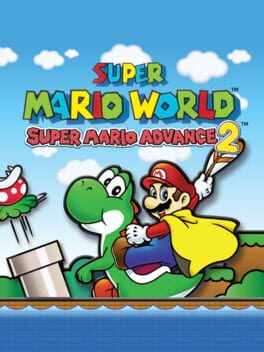
Super Mario World
A 2D platformer and first entry on the SNES in the Super Mario franchise, Super Mario World follows Mario as he attempts to defeat Bowser's underlings and rescue Princess Peach from his clutches. The game features a save system, a less linear world map, an expanded movement arsenal and numerous new items for Mario, alongside new approaches to level design and art direction.
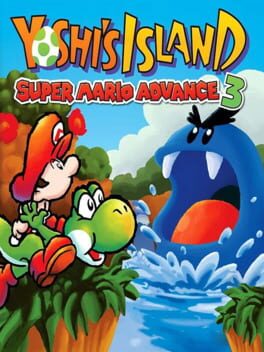
Super Mario World 2: Yoshi's Island
Super Mario World 2: Yoshi's Island is a platform video game acting as a prequel to 1990's Super Mario World. The game casts players as Yoshi as he escorts Baby Mario through 48 levels in order to reunite him with his brother Luigi, who had been kidnapped by Baby Bowser's minions. As a Super Mario series platformer, Yoshi runs and jumps to reach the end of the level while solving puzzles and collecting items. In a style new to the series, the game has a hand-drawn aesthetic and is the first to have Yoshi as its main character. The game introduces his signature abilities to flutter jump, produce eggs from swallowed enemies, and transform into vehicles.
Super Paper Mario
The newest chapter of the Paper Mario story isn't just out of this world... it's out of this dimension. What at first glance appears to be a 2D side-scroller ripped straight from the stylized pages of the Paper Mario universe soon turns into a hilarious dimension-shifting platformer possible only on Wii.
Super Smash Bros. for Nintendo 3DS
Super Smash Bros. for Nintendo 3DS is the first portable entry in the renowned series, in which game worlds collide. Up to four players battle each other locally or online using some of Nintendo’s most well-known and iconic characters across beautifully designed stages inspired by classic portable Nintendo games. It’s a genuine, massive Super Smash Bros. experience that’s available to play on the go, anytime, anywhere.
Super Smash Bros. for Wii U
Super Smash Bros. for Wii U is the fourth console-based entry in the popular Super Smash Bros. series of fighting games. With an even larger roster of fighters than its predecessors and the introduction eight player battles, Smash for Wii U continues to add to the formula that gamers have loved since 1999.
Super Smash Bros. Ultimate
Legendary game worlds and fighters collide in the ultimate showdown—a new entry in the Super Smash Bros. series for the Nintendo Switch system! New fighters, like Inkling from the Splatoon series and Ridley from the Metroid series, make their Super Smash Bros. series debut alongside every Super Smash Bros. fighter in the series…EVER! Faster combat, new items, new attacks, new defensive options, and more will keep the battle raging whether you’re at home or on the go.
Super Tennis
Super Tennis is a 1991 tennis video game for the Super NES. It released at early points in the Super Nintendo's shelf lives and utilized mode 7.
Tak 2: Der Stab der Träume
The gameplay is almost identical to the original Tak Game, whereas Tak's weapon is always on hand and mana is represented by feather count and not a meter. The game takes place in various locations, such as tropical forests, canyons, volcanic areas, snowy tundras and other harsh environments. There are also a number of dimensional stages, in the Dreamworld. Tak gets aid from animals, a number of which did not appear in the first game. In this game, Tak's juju magic is triggered by holding down one button and pressing combos of other buttons. Tak also earns juju powers gradually throughout the game instead of having to seek them out.
Besitz
1
Tak and the Guardians of Gross
While cleaning up a shrine, Tak removes a giant crystal and inadvertently releases the four Big G's, four of the nastiest, most disgusting Titans to terrorize Tak's village: Trashthulu the landfill giant, Slopviathan the slime giant, Gorgonzilla the molten cheese giant, and Stinkolossus the stink giant. Now Tak must find the Juju masters of the Big G's and acquire the magic needed to stop the giants before they make a mess that will take Tak an eternity to clean up!
Besitz
1
Tak und die Macht des Juju
An ancient prophecy foretells that the Moon Juju, the kind protector of the Pupanunu people, would be weakened by the evil Tlaloc, an embittered Pupanunu shaman, so he could turn the Pupanunu people into sheep as revenge for not being made high shaman in favor of another shaman, Jibolba. The prophecy also mentions a great and mighty warrior who would restore the Moon Juju, defeat Tlaloc, and bring peace to the Pupanunu people.
Having escaped Tlaloc's spell, Jibolba believes his apprentice Lok to be the warrior of the prophecy and prepares to send him off; however, it appears that Lok has been turned into a sheep. Jibolba sends his younger apprentice, Tak (voiced by Jason Marsden), to find magical plants and change him back, though it turns out not to be Lok. Jibolba tells Tak to obtain the Spirit Rattle, which allows the wielder to communicate with powerful Juju spirits to assist him, while he finds Lok.
Tak returns with the Rattle to find that Lok has been trampled to death by a herd of sheep. Jibolba has Tak collect 100 magic Yorbels and Lok's spirit from the spirit world, allowing him to successfully resurrect Lok. An unfortunate side-effect of the resurrection, however, is a severe case of diarrhea. Tak obtains the Moon Stones instead while Lok recovers, restoring the Moon Juju to full strength.
The Moon Juju reveals that the warrior of the prophecy is not Lok, but Tak, as he has already fulfilled almost everything the prophecy predicted. Using his arsenal of Juju spells, Tak defeats Tlaloc and turns him into a sheep, finally fulfilling the prophecy.
Besitz
1
Tetris
Tetris is a puzzle video game for the Game Boy released in 1989. It is a portable version of Alexey Pajitnov's original Tetris and it was bundled in the North American and European releases of the Game Boy itself. It was the first game compatible with the Game Link Cable, a pack-in accessory that allowed two Game Boys to link together for multiplayer purposes.
Besitz
1
Tetris & Dr. Mario
Compliation game released for the Super Nintendo featuring both Tetris and Dr Mario.
The Callisto Protocol
In this narrative-driven, third-person survival horror game set 300 years in the future, the player will take on the role of Jacob Lee – a victim of fate thrown into Black Iron Prison, a maximum-security penitentiary located on Jupiter's moon, Callisto. When inmates begin to transform into monstrous creatures, the prison is thrown into chaos.
The Last of Us
The Last of Us is a third-person action-adventure game featuring a mix of exploration, stealth and combat. Players face both infected creatures and hostile human enemies while progressing through varied environments. The game includes a narrative-driven single-player campaign and a competitive online multiplayer mode called Factions. Trophy support is included, and additional downloadable content was made available separately.
The Last of Us Part II
The Last of Us Part II is an action-adventure game set five years after the events of The Last of Us. The player traverses post-apocalyptic environments such as buildings and forests to advance the story. They can use firearms, improvised weapons, and stealth to defend against hostile humans and cannibalistic creatures infected by a mutated strain of the Cordyceps fungus. The game intermittently switches control between Ellie and Abby, and also briefly Joel in the opening sequence. The nimble nature of the player character introduces platforming elements, allowing the player to jump and climb to traverse environments and gain advantages during combat.
The Last of Us Remastered
The Last of Us Remastered is an updated release of the PS3 game The Last of Us. It is identical to the PS3 version but runs at a 1080p resolution and incorporates character models with a higher resolution. There are also improved shadows and lighting, upgraded textures, 60 frames per second and other types of improvements. In addition to the base game, two map packs and the expansion The Last of Us: Left Behind are included.
Besitz
1
The Legend of Zelda
The Legend of Zelda is the first title in the Zelda series, it has marked the history of video games particularly for it's game mechanics and universe. The player controls Link and must make his way through the forests, graveyards, plains and deserts of the Otherworld to find the secret entrances to the eight dungeons and try to restore the broken Triforce. Among the game's mechanics, it was the first time we saw a continuous world that could be freely explored, power-ups that permanently enhanced the main character's abilities and a battery save feature that allowed players to keep their progress instead of having to start over. The gameplay balanced action sequences with discovery, secrets and exploration.
The Legend of Zelda: A Link Between Worlds
The Legend of Zelda: A Link Between Worlds is the first Zelda game made exclusively for the Nintendo 3DS. It is an indirect sequel to A Link to the Past with the same version of Hyrule but with new characters and gameplay elements. Unlike the series' tradition, many areas of the world are accessible from the beginning of the game and the dungeons can be visited in any order. Puzzles are encountered not only in dungeons but also in the open world, a part of them revolves around the game's 3D visual effect. The 3DS touch-screen display shows the world, dungeon or map depending on where you are.
Besitz
1
The Legend of Zelda: A Link to the Past
The Legend of Zelda: A Link to the Past is a top-down action game with puzzle-solving elements similar to the original The Legend of Zelda. After the side-scrolling and RPG-like gameplay of Zelda II: The Adventure of Link, the game is a return to the top-down view and gameplay style of the first installment. It introduces major new items to the series such as the Master Sword and the concept of two different worlds, which was revisited to some extent in Ocarina of Time with two distinct time periods rather than dark and light worlds.